

IOT in MEDICAL LABORATORY
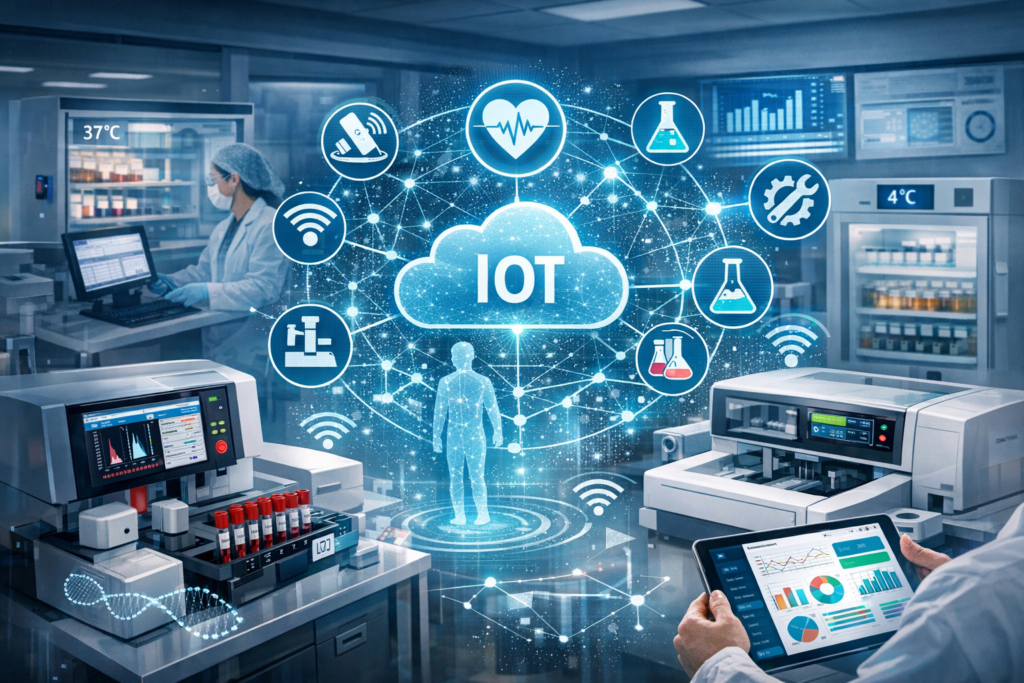
The Internet of Things (IoT) in healthcare refers to interconnected medical devices, laboratory instruments, and information systems that collect, transmit, and analyze data in real time. In modern diagnostic laboratories, IoT enables seamless integration between analyzers, Laboratory Information Systems (LIS), and hospital management platforms.
Connected hematology, biochemistry, and immunoassay analyzers automatically transmit test results to centralized databases, reducing manual entry errors and turnaround time. Smart sample tracking systems using RFID and barcode technologies ensure full traceability from phlebotomy to result validation.
IoT-enabled temperature and humidity sensors continuously monitor reagent storage, blood banks, and incubators, generating automated alerts to prevent quality compromise. Predictive maintenance systems embedded in laboratory equipment analyze performance metrics to anticipate technical failures before downtime occurs.
Cloud-based dashboards allow laboratory directors to monitor workload distribution, quality control trends, reagent consumption, and financial KPIs remotely. Integration with AI-driven analytics enhances diagnostic accuracy by identifying abnormal patterns across large datasets.
In infection control, IoT devices support biosafety compliance by tracking sterilization cycles and environmental conditions. Moreover, patient-facing IoT tools—such as wearable health monitors—can transmit biomarker data directly to laboratories for advanced testing and longitudinal analysis.
Ultimately, IoT transforms the diagnostic laboratory into a data-driven, automated, and highly efficient ecosystem, improving quality assurance, operational efficiency, and clinical decision-making.